Security and access control
Collapsing authentication, identity correlation, upstream credentials, and administrative access into one generic “security” concept makes it hard to trace which credential authorised a request, or who is allowed to change what on the appliance itself. Agent Stream keeps these concerns distinct rather than collapsing them into one. Authenticated principals, caller-match sources, central OAuth identifiers, upstream credentials, and identity hashes establish who a caller is; a separate role ladder, an encrypted secrets store, and SSRF validation govern who can administer the appliance and how it protects itself. Providers and Models →
Authenticated Identity
Authenticated identity is the runtime result of source authentication for one inbound request. It is not a configuration object but a per-request artefact: it carries the authenticated principal (the credential that was successfully verified) plus any auth-specific metadata.
A surface can authenticate its caller using a JWT bearer token, an API key, or mutual TLS (mTLS). See Pipeline and stages → for how source authentication operates in the inbound stage order.
How source authentication finds a caller’s stable identity
The Caller-Match Source is the configured place source authentication looks for a presented credential and derives the Member’s stable identity: a request header, a JWT claim, a body path, an mTLS attribute, or an API-key binding. See Cost and attribution → for how derived identities map to Members and Teams.
How OAuth sign-in identifiers are shared across surfaces
An OAuth Identifier is a reusable, central store of public OAuth 2.0 / OIDC sign-in identifiers (authority, client ID, and scopes, never secrets) for Microsoft Entra, Okta, or generic OIDC issuers. Identifiers are referenced by ID from IDE front-door sign-in, per-member upstream sign-in, and the dashboard sandbox, so the same identifiers are entered once and every Surface follows an edit.
How front-door and upstream identities can differ
Dual-Token is the pattern where the front-door identity (the caller signing in to the IDE Surface) and the upstream identity (the credential the member Surface presents to its provider) are different identities. The client forwards the upstream credential separately in the X-Agent-Stream-Upstream-Authorization header, and the front-door OPA input carries that fact so a policy can require the extra credential for specific models. See IDE Surface →.
What a Signed Governance Record proves about an interaction
A Signed Governance Record is an optional, tamper-evident transcript of one interaction (prompt, completion, per-stage verdicts, identity, metrics, trace ID), signed by the appliance and chained to the prior record for the same Surface via a content hash. Records can be exported through integrations and verified against the appliance’s DID document. See Governance records →.
How RBAC, secrets, and SSRF protection guard the control plane
Administering the appliance itself is governed separately from caller identity resolution:
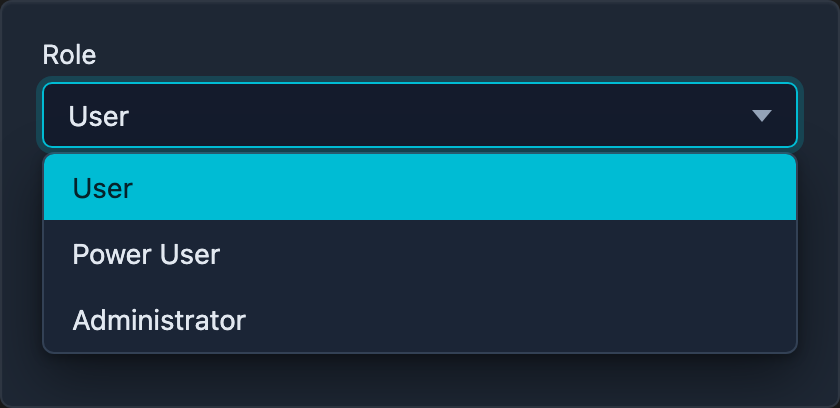
- Role-based access control (RBAC) governs appliance management through the dashboard using an ordered role ladder (Administrator, Power User, User).
- Secrets management resolves provider API keys and other credentials from a secrets store that is encrypted at rest, so raw credentials are never embedded directly in Surface configuration.
- SSRF protection validates operator-supplied endpoints against cloud-metadata addresses and unsafe internal targets.
Related
- OPA policies: Policy decisions that run against the identity source authentication establishes.
- Cost and attribution: How an authenticated caller maps to a Member and a Team.
- Governance records: The signed interaction transcript that records identity hashes and stage verdicts, encrypted at rest.
- Trust-fabric integration: How mTLS identity binding extends into gateway-to-gateway trust.
- Pipeline and stages: Where source authentication runs in the inbound stage order.
Glad to hear it. Thanks for letting us know.
Sorry to hear that. Thanks for letting us know.